


Personal
Poker
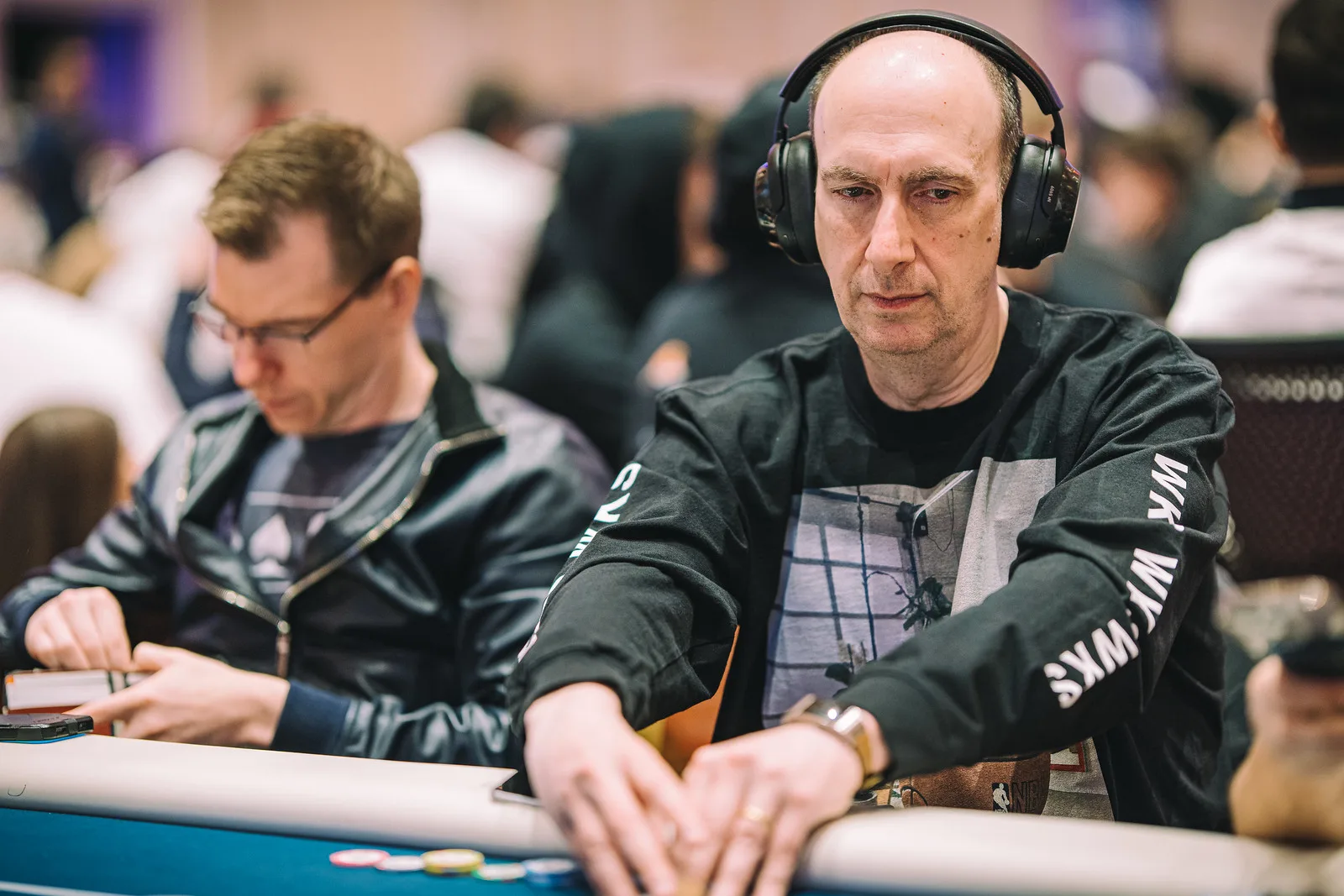
Erik Seidel: 10-Time WSOP Bracelet Champion and One of Poker’s Greatest Legends
Erik Seidel is an American professional poker player from New York City, universally recognized as one of the greatest and most enduring figures in the history of the game. Born on November 6, 1959, Seidel came to poker through backgammon and Wall Street trading before establishing a career that has now spanned nearly four decades. With ten World Series of Poker bracelets — tied for third all-time — a WPT title, an EPT championship, and over $48 million in documented live tournament earnings, Seidel has competed at the highest level across multiple generations of poker, adapting to every shift in strategy, format, and competition that the modern game has produced. He was inducted into the Poker Hall of Fame in 2010, a recognition of not just his results but the breadth and longevity of his contribution to the sport.
Erik Seidel’s Personal Life
Erik Seidel was born on November 6, 1959, in New York City, the son of a mother who raised him and his two brothers on her own. He grew up intellectually curious and competitive, drawn to games of skill and strategy from a young age. As a college student in the 1970s, he discovered backgammon and recognized almost immediately that he had a rare aptitude for the game. He dropped out of school to pursue it professionally, spending roughly eight years as one of the best backgammon players in New York, earning access to the renowned Mayfair Club — an invitation-only gathering place where the city’s elite game players convened. The Mayfair Club introduced him to a cohort that would later become some of the most celebrated names in poker history, including Stu Ungar, Dan Harrington, Howard Lederer, and Paul Magriel.
After his backgammon career, Seidel became a stockbroker on the American Stock Exchange in 1985, but the 1987 market crash cost him that position and redirected his attention back to card games. He transitioned into poker and immediately found the same edge that had made him a backgammon champion. He relocated from New York City to Las Vegas in the 1990s with his wife Ruah and their two daughters, Elian and Jamesin, and made the city his permanent home.
His most widely known non-poker contribution to the game came through his mentorship of journalist Maria Konnikova, who in 2016 asked Seidel to teach her poker from scratch. Under his guidance, Konnikova went on to win $350,000 in tournament prize money and wrote the bestselling book “The Biggest Bluff” about the experience. The mentorship relationship showcased a side of Seidel that his competitive results alone do not fully capture: a willingness to share knowledge generously and a belief in poker as a tool for developing sharper thinking about decision-making under uncertainty.
Erik Seidel’s Beginning in Poker
Erik Seidel’s first major poker tournament was also one of the most dramatic moments in WSOP history. In 1988, he reached the final of the World Series of Poker Main Event, where he faced defending champion Johnny Chan heads-up. Chan’s bluff-catch on the final hand — where he correctly read Seidel’s bet for weakness and called to win the championship — was later immortalized as one of the opening scenes of the 1998 film Rounders, introducing that moment to an audience that extended far beyond poker’s existing fan base. Despite the runner-up finish, the visibility of the performance launched Seidel’s reputation as a player of the highest caliber.
He converted that reputation into results over the following decades. His first WSOP bracelet came in 1992 in the $2,500 Limit Hold’em event for $168,000. By 1994 he had three bracelets, and he continued to add to that total at intervals reflecting his selective, quality-over-quantity approach to tournament scheduling. His presence in high-roller events became a constant through the 2010s and beyond, and his ability to remain competitive against opponents a generation or two younger than him is considered one of the most remarkable feats of adaptation in poker history. He has cashed at the WSOP every year since 1992 with a single exception in 2017.
Erik Seidel’s Strategies and Playing Style
Erik Seidel is the archetype of the thinking player: patient, precise, and constantly refining his understanding of the game regardless of what era he is competing in. He has never been a player who relies on physical tells or theatrical timing; his edge has always come from his ability to think more clearly and make better decisions than his opponents at every stage of a hand. The foundation laid by years of professional backgammon — a game demanding deep probabilistic thinking, combinatorial calculation, and the management of variance — gave him a framework for poker that many players never fully develop.
What distinguishes Seidel from many decorated veterans is his genuine commitment to continuing growth. He has consistently updated his technical approach as solver-based analysis became mainstream, working to understand GTO frameworks not as replacements for his experience but as additional tools to sharpen his existing decision-making. Peers from multiple generations describe him as one of the most respected students of the game precisely because he approaches learning with the same seriousness at 60 as he did at 30.
His game is characterized by exceptional discipline in situation selection: he plays when he has an edge, folds when he does not, and avoids the ego-driven decisions that lead to costly mistakes over long tournaments. He has won bracelets in six different poker disciplines across a span of more than three decades — an achievement that speaks to genuine versatility and an unbroken line of technical competence from the era of fixed-limit games through the current high-stakes No-Limit Hold’em and Super High Roller era.
Erik Seidel’s Greatest Achievements
Erik Seidel’s ten WSOP bracelets, spread across six game variants from 1992 to 2023, represent one of the longest and most diverse championship records in the World Series of Poker’s history. His first eight bracelets came between 1992 and 2007, after which he went silent on the bracelet front for over a decade before winning his ninth in an online Super High Roller event in 2021 and his tenth in December 2023 at WSOP Paradise in the Bahamas, where he won the $50,000 Super High Roller for $1,704,400 — his largest WSOP payday.
Beyond the WSOP, Seidel’s resume includes a 2008 World Poker Tour title at the Foxwoods Poker Classic for $992,890 and a 2015 European Poker Tour Grand Final Super High Roller championship for €2,015,000, his largest single cash in Europe. He was inducted into the Poker Hall of Fame in 2010, and he won the 2011 Aussie Millions $250,000 Super High Roller for $2,472,555, which remains the largest single tournament win of his career. His 151 WSOP cashes rank him among the most active and consistent performers in the history of the event.
Erik Seidel in WSOP
| Year | Event | Prize |
|---|---|---|
| 1992 | $2,500 Limit Hold’em | $168,000 |
| 1993 | $2,500 Omaha 8-or-Better | $94,000 |
| 1994 | $5,000 Limit Hold’em | $210,000 |
| 1998 | $5,000 Deuce-to-Seven Draw | $132,700 |
| 2001 | $3,000 No-Limit Hold’em | $411,300 |
| 2003 | $1,500 Pot-Limit Omaha | $146,100 |
| 2005 | $2,000 No-Limit Hold’em | $611,795 |
| 2007 | $5,000 Championship NL Deuce-to-Seven Draw w/Rebuys | $538,835 |
| 2021 | $10,000 Super Million$ High Roller (Online) | $977,842 |
| 2023 | $50,000 Super High Roller (WSOP Paradise) | $1,704,400 |
Other Achievements
Erik Seidel’s non-WSOP titles are concentrated in the most prestigious Super High Roller events the global circuit has to offer. His 2011 Aussie Millions $250,000 Super High Roller win for $2,472,555 remains his single largest career cash and came in an event that draws the most elite field in Southern Hemisphere poker. His 2015 EPT Grand Final Super High Roller victory for €2,015,000 was one of the most significant results of his career at that stage and demonstrated that he could continue to compete at the highest buy-in levels against the generation of players who had grown up on GTO training.
He also won the 2008 World Poker Tour Foxwoods Poker Classic Main Event for $992,890 and claimed a third-place finish at the 2016 Super High Roller Bowl for $2,400,000 — his second-largest career cash. A 2022 runner-up finish in the EPT Barcelona €100,000 Super High Roller for €1,286,490 further confirmed that even well past sixty years of age, Seidel remains one of the most capable players in any field.
Top 10 Biggest Cashes
| Place | Prize | Event | Year |
|---|---|---|---|
| 1st | $2,472,555 | Aussie Millions $250,000 Super High Roller | 2011 |
| 3rd | $2,400,000 | Super High Roller Bowl I ($300,000) | 2016 |
| 1st | €2,015,000 | EPT Grand Final €100,000 Super High Roller | 2015 |
| 1st | $1,704,400 | WSOP Paradise $50,000 Super High Roller | 2023 |
| 2nd | €1,286,490 | EPT Barcelona €100,000 Super High Roller | 2022 |
| 1st | $992,890 | WPT Foxwoods Poker Classic Main Event | 2008 |
| 1st | $977,842 | WSOP Super Million$ High Roller (Online) | 2021 |
| 3rd | A$1,076,000 | Aussie Millions $100,000 Challenge | 2014 |
| 1st | $750,000 | NBC National Heads-Up Championship | 2011 |
| 1st | $611,795 | WSOP $2,000 No-Limit Hold’em | 2005 |
TV Appearances
Erik Seidel appeared on High Stakes Poker, the landmark GSN cash game series that documented the highest-stakes live poker sessions ever filmed for television, where he competed alongside other legends of the game across multiple seasons. He was also a recurring presence on Poker After Dark, the NBC late-night high-stakes format that ran from 2007 through the mid-2010s. Beyond his own television appearances, Seidel is indirectly featured in popular culture through the 1998 film Rounders, which uses footage of his 1988 WSOP Main Event final table against Johnny Chan as an opening scene — a moment that has introduced millions of viewers to his name and to the drama of championship poker.
FAQ about Erik Seidel
How many WSOP bracelets does Erik Seidel have?
Erik Seidel has ten WSOP bracelets, which tie him for third all-time in bracelet history alongside Doyle Brunson and Johnny Chan, behind only Phil Hellmuth (17) and Phil Ivey (11). His bracelets span six different game variants and were won between 1992 and 2023, a 31-year window that is exceptional even by the standards of the game’s most accomplished players.
Is Erik Seidel in the Poker Hall of Fame?
Yes. Erik Seidel was inducted into the Poker Hall of Fame in 2010. The induction recognized both his sustained excellence across multiple decades and his contribution to the growth and visibility of the game, including his widely documented mentorship relationships and his role as one of the Mayfair Club generation’s defining figures.
What is Erik Seidel’s connection to the movie Rounders?
The 1998 movie Rounders opens with footage from the 1988 WSOP Main Event final table between Erik Seidel and Johnny Chan. Chan correctly calls Seidel’s final bet as a bluff to win the championship, and the scene is used to introduce the protagonist Matt Damon’s character to the world of high-stakes poker. Seidel’s runner-up result in that event was his first major poker appearance and has been seen by millions of viewers through the film.
What is Erik Seidel’s total live tournament earnings?
Erik Seidel’s total documented live tournament earnings are $48,681,980 according to the Hendon Mob database, with 461 total cashes. His biggest single career cash was $2,472,555, earned by winning the 2011 Aussie Millions $250,000 Super High Roller.
Who did Erik Seidel mentor in poker?
Erik Seidel mentored journalist and author Maria Konnikova beginning in 2016, teaching her poker from scratch and guiding her through competitive play. Under his coaching, Konnikova went on to win approximately $350,000 in tournament prize money. She later documented the entire experience in her bestselling book “The Biggest Bluff,” which became one of the most widely read books about poker ever published and introduced a new generation of readers to both the game and to Seidel’s philosophy of decision-making.
What did Erik Seidel do before poker?
Before becoming a professional poker player, Erik Seidel had two distinct careers. He first played professional backgammon for approximately eight years, becoming skilled enough to gain entry to the prestigious Mayfair Club in New York City where the city’s best game players gathered. He then worked as a stockbroker on the American Stock Exchange beginning in 1985, but the 1987 market crash ended that career and redirected him toward poker full time.
Has Erik Seidel won a WPT or EPT title?
Yes to both. Seidel won the 2008 World Poker Tour Foxwoods Poker Classic Main Event for $992,890, his lone WPT title. At the European Poker Tour, he won the 2015 EPT Grand Final €100,000 Super High Roller for €2,015,000 in Monte Carlo, defeating Dzmitry Urbanovich heads-up in one of the most high-profile Super High Roller finals of that era.
Where was Erik Seidel born and where does he live?
Erik Seidel was born on November 6, 1959, in New York City, where he grew up and began his career as a backgammon player and then a Wall Street trader. He relocated to Las Vegas in the 1990s with his wife Ruah and their two daughters, Elian and Jamesin, and has lived there ever since. Las Vegas serves as the natural base for a high-stakes professional given the concentration of major tournament series and year-round live cash game action.
What is the Mayfair Club and what role did it play in Seidel’s career?
The Mayfair Club was an exclusive private social club in New York City that served as a gathering place for the city’s top game players, including backgammon and chess professionals and eventually poker players. Among its alumni were Stu Ungar, Dan Harrington, Howard Lederer, Jason Lester, and Paul Magriel. Erik Seidel gained access as a young backgammon professional, and the environment sharpened his competitive instincts and strategic thinking in ways that translated directly into his subsequent poker career.
How does Erik Seidel continue to compete at an elite level at his age?
Erik Seidel has maintained his competitiveness into his sixties by combining the pattern-recognition and emotional discipline built over decades with a genuine willingness to update his technical approach as the game has evolved. Unlike many veterans who rely on accumulated heuristics, Seidel has engaged with modern solver-based analysis to understand GTO frameworks, adding new tools to an already exceptional foundation. Peers consistently cite his intellectual rigor, humility about ongoing learning, and ability to detach from results as the qualities that explain his extraordinary longevity at the highest levels.
