
Omaha Hi-Lo, a variant of Omaha poker, offers a thrilling twist by splitting the pot between the highest and lowest hands. The objective is to create both the best high hand and the best low hand using exactly two of your four hole cards and three of the five community cards. The game is typically played in a pot-limit format, adding an extra layer of strategy.
In Omaha Hi-Lo, the betting structure follows the familiar pattern of blinds rather than antes. This format usually features four rounds of betting: pre-flop, flop, turn, and river. The dual objective—winning both the high and the low pots—forces players to think beyond just having a strong hand. It’s a high-low split game, so knowing when to bet big and when to fold can be the difference between a big win and a frustrating loss.
Comparing Omaha Hi-Lo to No Limit Hold’em
For players familiar with No Limit Hold’em, diving into Omaha Hi-Lo might feel like stepping into a parallel universe. While both games share some fundamental poker principles, there are key differences that set them apart. Understanding these differences is crucial for mastering Omaha Hi-Lo.
- Hand Composition: In Omaha Hi-Lo, you are dealt four hole cards instead of two. This increases the complexity of potential hand combinations.
- Community Cards: Just like in Hold’em, five community cards are dealt. However, in Omaha Hi-Lo, you must use exactly two of your hole cards and three from the board.
- Pot Split: The pot in Omaha Hi-Lo is divided between the highest and the lowest hand, introducing a split-pot dynamic absent in No Limit Hold’em.
- Betting Structure: Omaha Hi-Lo is usually played with a pot-limit betting structure, contrasting the no-limit betting of Hold’em. This affects the pace and strategy of the game.
- Low Hand Qualification: For a low hand to qualify in Omaha Hi-Lo, it must consist of five cards ranked eight or lower, with no pairs. This adds a layer of complexity to hand evaluation.
- Strategy: Omaha Hi-Lo requires players to think about both high and low hands simultaneously, making strategic decisions more complex than in No Limit Hold’em.
- Variance: The split-pot nature of Omaha Hi-Lo often leads to more frequent swings and higher variance compared to the more straightforward win-or-lose scenario in Hold’em.
How to Play Omaha Hi-Lo
Understanding how to play Omaha Hi-Lo is essential for both new and experienced poker players. Here’s a comprehensive, step-by-step guide to get you started on mastering this exciting variant.
Dealing the Cards
The game begins with each player being dealt four hole cards face down. Unlike Hold’em, where you only receive two cards, these extra cards significantly increase the number of potential hand combinations.
Example: You receive 8♣️ K♦️ 4♠️ A♥️.
Blinds and Betting
Omaha Hi-Lo is typically played with blinds rather than antes. The player to the left of the dealer posts the small blind, and the player to their left posts the big blind. The blinds ensure there’s money in the pot to compete for.
Example: Small blind is $1, and the big blind is $2. The initial pot size is $3.
Pre-Flop
After the blinds are posted, the first betting round begins. Players can call, raise, or fold based on their four hole cards. The betting continues clockwise around the table until all players have either matched the highest bet or folded.
Example: You decide to raise to $6 with your 8♣️ K♦️ 4♠️ A♥️. The small blind calls $5 more, and the big blind calls $4 more. The pot size is now $18.
The Flop
The dealer places three community cards face up on the table. These cards are shared by all players to create the best possible high and low hands.
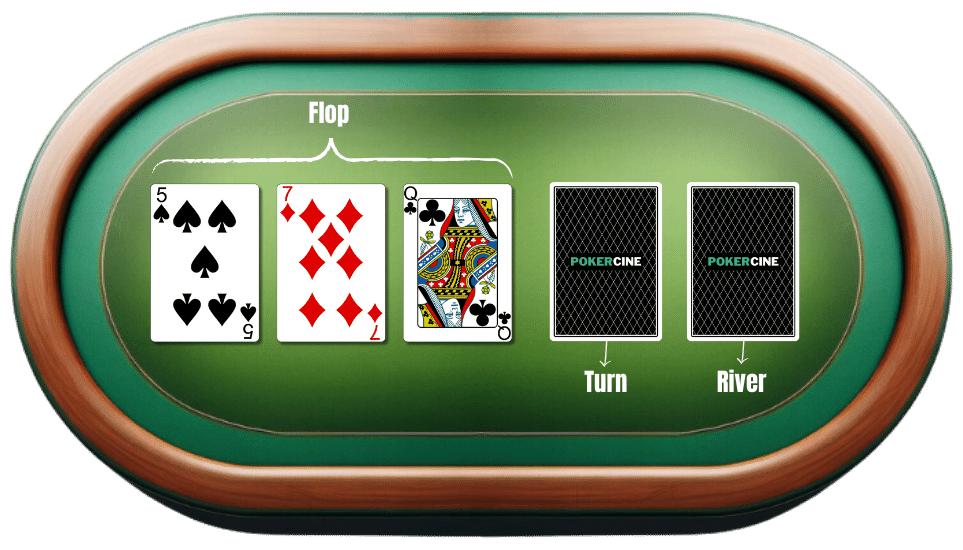
Example: The flop comes 5♠️ 7♦️ Q♣️.
The small blind bets $18 (pot-sized bet), the big blind calls, and you call. The pot size is now $72.
The Turn
The dealer places a fourth community card, known as the turn, face up on the table. This card can be used in combination with your hole cards and the flop.
Example: The turn is 3♠️.
The small blind and the big bling both checks. You bet $72 (pot-sized bet), the small blind calls, and the big blind folds. The pot size is now $216.
The River
The dealer places the fifth and final community card, the river, face up on the table. Players now have all the information they need to form their best high and low hands.
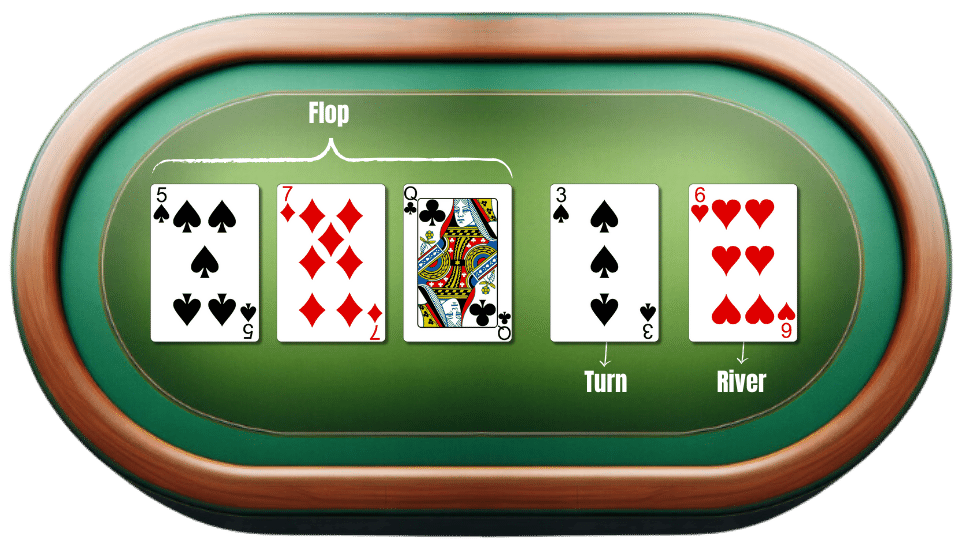
Example: The river is 6♥️.
You check and the small blind checks as well. The pot size remains $216.
Showdown
After the final betting round, any remaining players reveal their hole cards. The pot is split between the best high hand and the best low hand, if a qualifying low hand exists.
Example:
You reveal 8♣️ K♦️ 4♠️ A♥️
Your high hand is a straight: 4♠️ 5♠️ 6♥️ 7♦️ 8♣️
Your low hand is: A♥️ 3♠️ 4♠️ 5♠️ 6♥️
The small blind reveals A♦️ 2♥️ 9♠️ 10♦️
His high hand is only ace high: A♦️ Q♣️ 10♦️ 9♠️ 7♦️
His low hand is: A♦️ 2♥️ 3♠️ 5♠️ 6♥️, which qualifies as the lowest possible hand.
The pot is split: you win the high hand, and he wins the low hand. Each one gets $ 108.
Qualifying Low Hand
To qualify for the low hand in Omaha Hi-Lo, a player must have five cards ranked eight or lower, with no pairs. Flushes and straights do not count against your hand. The best possible low hand is A-2-3-4-5, also known as the “wheel.”
Hand Example from Start to Finish
- Dealing: You receive 8♣️ K♦️ 4♠️ A♥️.
- Pre-Flop: You raise to $6; small blind calls $5 more, big blind calls $4 more. Pot size is $18.
- Flop: 5♠️ 7♦️ Q♣️.
- Post-Flop Betting: Small blind bets $18 (pot-sized bet), big blind calls, you call. Pot size is $72.
- Turn: 3♠️.
- Turn Betting: You bet $72 (pot-sized bet), small blind calls, big blind folds. Pot size is $216.
- River: 6♥️.
- Final Betting: You check, remaining player checks. Pot size is $216.
- Showdown: You reveal 8♣️ K♦️ 4♠️ A♥️. Small blind reveals A♦️ 2♥️ 9♠️ 10♦️.
In this example, your high hand is evaluated as a straight (4♠️ 5♠️ 6♥️ 7♦️ 8♣️), and your low hand is A♥️ 3♠️ 4♠️ 5♠️ 6♥️, which qualifies. The small blind wins the low hand with A♦️ 2♥️ 3♠️ 5♠️ 6♥️. The pot is then split based on the best high and low hands.
Hand Rankings in Omaha Hi-Lo
Understanding hand rankings is essential for mastering Omaha Hi-Lo, as it involves both high and low hands. The logic behind these rankings is to determine the best possible combination of cards for both the highest and lowest hands. High hand rankings follow the traditional poker hand hierarchy, while low hand rankings consider the lowest five-card combination with unique criteria.
High Hand Rankings
In Omaha Hi-Lo, the high hand rankings follow the standard poker hierarchy:
- Royal Flush: A♥️ K♥️ Q♥️ J♥️ 10♥️ – The best possible hand with the highest cards all in the same suit.
- Straight Flush: 8♠️ 7♠️ 6♠️ 5♠️ 4♠️ – Five consecutive cards of the same suit.
- Four of a Kind: 9♦️ 9♣️ 9♠️ 9♥️ 2♦️ – Four cards of the same rank.
- Full House: Q♣️ Q♦️ Q♥️ 7♠️ 7♦️ – Three cards of one rank and two cards of another.
- Flush: K♠️ J♠️ 8♠️ 4♠️ 3♠️ – Any five cards of the same suit, not in sequence.
- Straight: 10♣️ 9♠️ 8♦️ 7♣️ 6♥️ – Five consecutive cards of different suits.
- Three of a Kind: A♦️ A♣️ A♠️ 6♥️ 3♣️ – Three cards of the same rank.
- Two Pair: J♠️ J♦️ 5♥️ 5♣️ 2♠️ – Two cards of one rank and two cards of another.
- One Pair: 4♥️ 4♣️ Q♠️ 9♦️ 7♣️ – Two cards of the same rank.
- High Card: A♠️ K♦️ 7♣️ 5♥️ 3♠️ – When no other hand is made, the highest card plays.
Low Hand Rankings
For the low hand, the aim is to have the lowest five-card combination, with straights and flushes not counting against the hand. Pairs are not allowed.
- A♠️ 2♣️ 3♦️ 4♥️ 5♠️ – “The Wheel”: The best possible low hand.
- A♣️ 2♦️ 3♠️ 4♣️ 6♥️
- A♦️ 2♠️ 3♣️ 5♥️ 6♠️
- A♥️ 2♠️ 4♣️ 5♠️ 6♦️
- A♦️ 3♠️ 4♣️ 5♠️ 6♥️
- 2♠️ 3♣️ 4♠️ 5♦️ 6♣️
- A♥️ 2♠️ 3♣️ 4♦️ 7♠️
- A♦️ 2♣️ 3♠️ 5♣️ 7♠️
- A♣️ 2♦️ 4♠️ 5♥️ 7♣️
- A♠️ 3♣️ 4♠️ 5♣️ 7♦️
The list continues with the same logic: the lower the highest card in the hand, the better the low hand is.
Check this video from All American Casino Guide on how to play Omaha Hi-Lo:
Tips and Tricks for Omaha Hi-Lo
Mastering Omaha Hi-Lo involves a mix of strategic thinking and psychological insight. Here are some advanced tips to help you elevate your game and outsmart your opponents.
- Play Tight Pre-Flop: In Omaha Hi-Lo, starting hand selection is crucial. Focus on hands that have strong potential for both high and low outcomes. A hand like A♠️ 2♣️ 3♦️ K♥️ is more valuable than one that only has high card potential.
- Chase the Nut Low: Aim for the best possible low hand, known as the “nut low.” This often involves hands that include A-2 combinations. Settling for a second-best low can lead to quartered pots.
- Value Position: Your position at the table significantly impacts your strategy. Playing in late position allows you to see your opponents’ actions before deciding on your own, giving you a strategic advantage.
- Read Your Opponents: Pay attention to betting patterns and tendencies. Identifying who plays aggressively or passively can help you make better decisions about when to call, raise, or fold.
- Manage Your Bankroll: Omaha Hi-Lo can be swingy due to the split-pot nature. Ensure you manage your bankroll wisely to withstand the variance.
Common Mistakes in Omaha Hi-Lo and How to Avoid Them
Even seasoned players can fall into common traps in Omaha Hi-Lo. Here’s how to sidestep these pitfalls:
- Overvaluing High Hands: One major mistake is focusing solely on the high hand potential and ignoring the low hand. Always consider both possibilities to maximize your chances of winning the pot. Play hands that can make both strong high and low hands. Don’t chase one-sided hands.
- Chasing Non-Nut Lows: Going after low hands that are not the nuts can be costly, especially when multiple players are vying for the low pot. Stick to hands with A-2 combinations or those with potential for the nut low.
- Ignoring Position: Playing aggressively from an early position without adequate information can lead to costly mistakes. Use position to your advantage. Act last when possible to gather information from your opponents’ actions.
- Playing Too Many Hands: Unlike Texas Hold’em, playing too many speculative hands in Omaha Hi-Lo can be detrimental. Be selective with your starting hands. Quality over quantity is key.
- Misreading the Board: In Omaha Hi-Lo, the board texture is crucial. Failing to recognize potential low hands or straights can lead to poor decision-making. Continuously evaluate the board for both high and low potential hands, and adjust your strategy accordingly.
- Poor Bankroll Management: Due to the nature of split pots, variance is higher in Omaha Hi-Lo. Many players fail to account for this and overextend their bankroll. Stick to solid bankroll management principles. Ensure you have enough to weather the ups and downs of the game.
Advanced Strategies and Tactics for Omaha Hi-Lo
Delving into the advanced strategies of Omaha Hi-Lo can set you apart from the average player. Understanding the nuances of starting hand selection, bluffing techniques, and the importance of position are crucial for mastering this variant.
Starting Hand Selection
Selecting the right starting hands is the foundation of a solid Omaha Hi-Lo strategy. Look for hands that can potentially win both the high and the low pot.
- Premium Hands: Hands like A♠️ 2♣️ 3♦️ K♥️ or A♥️ A♣️ 2♦️ 3♠️ have strong potential for scooping both high and low pots.
- Balanced Hands: Aim for hands that offer a good balance between high and low potential, such as A♠️ 2♣️ K♦️ Q♥️. These hands give you more flexibility on various flops.
- Avoid Middle Cards: Hands filled with middle cards like 6-7-8-9 are often trouble. They rarely form the nut low and usually end up in weak high hands.
Bluffing Techniques
Bluffing in Omaha Hi-Lo requires a keen understanding of your opponents and the board dynamics. Here’s how to effectively bluff in this variant:
- Representing the Nut Low: When the board shows potential for a strong low, and you have been playing consistently, a well-timed raise can convince your opponents you have the nut low.
- Semi-Bluffing: Bluffing with a draw to the nuts (both high and low) can be highly effective. Even if you’re called, you still have outs to win.
- Positional Bluffs: Bluff more frequently when in late position. You have the advantage of observing your opponents’ actions before making your move.
Importance of Position
Position is a critical factor in Omaha Hi-Lo. Playing from a strong position allows you to control the pot size and gather more information before making decisions.
- Early Position: Play tighter and more conservatively. You’ll be acting first and have less information about your opponents’ hands.
- Middle Position: Open up your range slightly, but remain cautious. Pay attention to the actions of players in late position.
- Late Position: This is where you can be more aggressive. Use your position to bluff, steal blinds, and put pressure on your opponents.
Adjusting Play Based on Opponents
Adapting your strategy based on your opponents’ tendencies is essential in Omaha Hi-Lo.
- Against Tight Players: Increase your aggression, especially in late position. Tight players are more likely to fold to pressure.
- Against Loose Players: Play more value hands. Loose players will call with a wider range, so capitalize on their weaker hands.
- Against Aggressive Players: Trap with strong hands. Use their aggression against them by calling and raising with premium hands.
Looking for more? Check this video from CrushlivePoker with some great insights into Omaha Hi-Lo:
Notable Bracelet Winners for Omaha Hi-Lo
Omaha Hi-Lo has seen some of the greatest poker players in history compete and triumph in this unique variant. The player with the most bracelets in Omaha Hi-Lo is Phil Ivey, who has made his mark with multiple wins in this category. Below is a list of famous poker players who have won a WSOP bracelet in Omaha Hi-Lo, including the number of bracelets won, the years they were won, the event, and the prize money.
| Player | Bracelets in Omaha Hi-Lo | Year |
|---|---|---|
| Benny Glaser | 2 | 2016, 2016 |
| Daniel Alaei | 2 | 2009, 2015 |
| Scotty Nguyen | 2 | 1997, 2001 |
| Erik Seidel | 1 | 1999 |
| Mike Matusow | 1 | 2002 |
| Scott Seiver | 1 | 2024 |
Fun Facts, Myths, and Records about Omaha Hi-Lo
- First Omaha Hi-Lo Event at WSOP: The first Omaha Hi-Lo event was introduced at the World Series of Poker (WSOP) in 1990. This addition marked the growing popularity of split-pot games in the poker world.
- Largest Omaha Hi-Lo Prize: The largest prize ever awarded in an Omaha Hi-Lo event at the WSOP was $852,692, won by Daniel Alaei in the $10,000 Omaha Hi-Lo Championship in 2013. This record stands as a testament to the high stakes and competitive nature of this variant.
- Myth – Only Pros Can Win Big: Contrary to popular belief, Omaha Hi-Lo has seen several amateur players make deep runs and win significant prizes. The game’s complexity levels the playing field, giving skilled amateurs a fighting chance against seasoned pros.
Famous Quotes about Omaha Hi-Lo
“Omaha Hi-Lo is a beautiful game because it requires you to think on multiple levels. You’re always looking for the best high hand while trying to scoop the low. It’s poker on steroids, baby!”
Scotty Nguyen“In Omaha Hi-Lo, you can’t just play strong high hands and expect to win. You need to balance your strategy and understand the value of the low hand. It’s about finding the right balance.”
Daniel Negreanu
Odds in Omaha Hi-Lo
Here are some key odds related to Omaha Hi-Lo that provide valuable insights into this poker variant:
- Chance of Making a Low Hand:
- In any given deal, there is a 60% chance of a low hand being possible by the river, meaning there will be three or more different cards ranked eight or lower on the board. This statistic highlights the frequent occurrence of low hands in Omaha Hi-Lo.
- Probability of Making a Low with Specific Starting Hands:
- With 2 low cards (e.g., A-2-J-Q), the probability of making a low by the river is 24%.
- With 3 low cards (e.g., A-3-4-K), the probability of making a low by the river is 40%.
- With 4 low cards (e.g., 3-4-7-8), the probability of making a low by the river is 49%.
- Odds with 1 Low-Card Flop:
- With 2 low cards in hand, the probability of making a low by the river is 16%.
- With 3 low cards in hand, the probability of making a low by the river is 26%.
- With 4 low cards in hand, the probability of making a low by the river is 24%.
- Odds with 2 Low-Card Flop:
- With 2 low cards in hand, the probability of making a low by the river is 59%.
- With 3 low cards in hand, the probability of making a low by the river is 72%.
- With 4 low cards in hand, the probability of making a low by the river is 70%.
- Top Starting Hands:
- The best starting hands in Omaha Hi-Lo often include combinations like A-A-2-3 double-suited, which offers the potential for both the nut low and a strong high hand. Other top hands include A-A-2-4 double-suited and A-A-3-4 double-suited.
Understanding these statistics helps you make informed decisions, improving your strategic play and increasing your chances of success.
Net Worth of Top 5 Most Famous Players in Omaha Hi-Lo
Here are the net worths of some of the most famous poker players known for their prowess in Omaha Hi-Lo. These figures provide a glimpse into the financial success that comes with mastering this complex variant.
- Phil Ivey – $100 million: Phil Ivey is widely regarded as one of the greatest all-around poker players. His success in Omaha Hi-Lo, along with ten WSOP bracelets and substantial earnings from both live tournaments and high-stakes cash games, has significantly contributed to his net worth.
- Daniel Negreanu – $50 million: Known for his exceptional reading abilities, Daniel Negreanu has amassed a significant fortune. His net worth is bolstered by tournament winnings, brand endorsements, and his role as a poker ambassador.
- Jason Mercier – $19 million: Jason Mercier is celebrated for his success in Omaha Hi-Lo, among other poker variants. With five WSOP bracelets and numerous other titles, his net worth reflects his consistent performance in high-stakes tournaments.
- Mike Matusow – $8 million: Mike “The Mouth” Matusow is a prominent figure in the poker world, known for his colorful personality and multiple WSOP bracelets in Omaha Hi-Lo. His net worth is a testament to his long-standing success in poker.
- David Benyamine – $5 million: David Benyamine is renowned for his skills in Omaha Hi-Lo, with significant live tournament earnings and high-stakes cash game success. His net worth highlight.
FAQ – Frequently Asked Questions for Omaha Hi-Lo
What is Omaha Hi-Lo?
Omaha Hi-Lo is a popular variant of Omaha poker where the pot is split between the highest and the lowest hand. Players aim to win both the high and low halves of the pot using two of their four hole cards and three of the five community cards.
Why is it called Omaha Hi-Lo?
The name “Omaha Hi-Lo” reflects the game’s structure of splitting the pot between the highest (Hi) and lowest (Lo) hands.
When was Omaha Hi-Lo invented?
Omaha Hi-Lo was introduced in the 1980s and became a part of the World Series of Poker (WSOP) in 1990, quickly gaining popularity.
What is the difference between Omaha Hi-Lo and Texas Hold’em?
In Omaha Hi-Lo, players receive four hole cards instead of two and must use exactly two of them in combination with three community cards. Additionally, the pot is split between the highest and the lowest hands, unlike Texas Hold’em, which awards the entire pot to the best hand.
What are the best starting hands in Omaha Hi-Lo?
The best starting hands typically include combinations like A-A-2-3 double-suited, A-2-3-4 double-suited, and A-A-2-4 double-suited. These hands provide strong potential for both high and low outcomes.
How to learn Omaha Hi-Lo?
To learn Omaha Hi-Lo, start by studying the rules and hand rankings. Practice by playing low-stakes games online or with friends, and watch tutorial videos or read strategy guides specific to Omaha Hi-Lo.
Omaha Hi-Lo for dummies or How to play Omaha Hi-Lo?
Omaha Hi-Lo is played with four hole cards dealt to each player. Players must use exactly two of their hole cards and three community cards to make the best high and low hands. The pot is split between the highest and lowest hands, with the low hand needing five unpaired cards ranked eight or lower.
How to win at Omaha Hi-Lo?
Winning at Omaha Hi-Lo requires selecting strong starting hands, understanding the odds, and playing strategically to scoop both high and low pots. Pay attention to position and adjust your strategy based on opponents’ tendencies.
How to deal the cards in Omaha Hi-Lo?
The dealer distributes four hole cards to each player, followed by a round of betting. Then, five community cards are dealt in stages: three on the flop, one on the turn, and one on the river, with betting rounds after each stage.
How to study for Omaha Hi-Lo?
Study Omaha Hi-Lo by reading strategy books, watching instructional videos, and analyzing hand histories. Joining poker forums and discussing hands with experienced players can also be beneficial. Specific resources like “Winning Omaha/8 Poker” by Mark Tenner and Lou Krieger are highly recommended.
What are the best books or resources about Omaha Hi-Lo?
“Winning Omaha/8 Poker” by Mark Tenner and Lou Krieger
“Omaha Hi-Lo: How to Win at the Lower Limits” by Shane Smith
Online resources like PokerStars, 888poker, and GG Poker offer strategy articles and tutorials.
What are some strategies for Omaha Hi-Lo?
Key strategies include playing tight and selecting strong starting hands, aiming for the nuts, being aware of potential low hands, and leveraging position to your advantage.
What are common mistakes to avoid in Omaha Hi-Lo?
Common mistakes include overvaluing high hands, chasing non-nut lows, ignoring position, playing too many hands, and misreading the board. Focus on balanced hand selection and play cautiously from early positions.
Where can I play Omaha Hi-Lo?
You can play Omaha Hi-Lo at various online poker sites and in live poker rooms. Popular online platforms include PokerStars, GG Poker, 888poker, and Party Poker.
What are the best sites to play Omaha Hi-Lo online?
PokerStars, GG Poker, 888poker and Party Poker
Where to play Omaha Hi-Lo for free?
Free Omaha Hi-Lo games are available on platforms like PokerStars, 888poker, and Party Poker. These sites offer play money games to practice without financial risk.
Omaha Hi-Lo near me?
Check local casinos or poker rooms for Omaha Hi-Lo games. Online platforms like PokerStars, GG Poker, 888poker, and Party Poker also offer location-based game searches.
Top bracelet winners in Omaha Hi-Lo?
Benny Glaser, Daniel Alaei and Scotty Nguyen with 2 bracelets each
Who is the best Omaha Hi-Lo player?
Phil Ivey is often regarded as one of the best Omaha Hi-Lo players due to his consistent high-stakes performance.
What are the biggest Omaha Hi-Lo tournaments?
The biggest Omaha Hi-Lo tournaments include the WSOP Omaha Hi-Lo events, particularly the $10,000 Omaha Hi-Lo Championship, which attracts top players from around the world.
What is the net worth of notable Omaha Hi-Lo players?
Phil Ivey ($100 million), Daniel Negreanu ($50 million), Jason Mercier ($19 million), Mike Matusow ($8 million) and David Benyamine ($5 million)
Embrace the Challenge of Omaha Hi-Lo: A Pokercine Perspective
Omaha Hi-Lo is a unique poker variant that offers a thrilling combination of skill, strategy, and excitement. This game, with its split-pot structure, demands a keen understanding of both high and low hand potentials, making it a favorite among players.
Omaha Hi-Lo offers endless opportunities to refine your skills. Dive into the game, practice consistently, and apply the strategies discussed