
The Theory of Poker
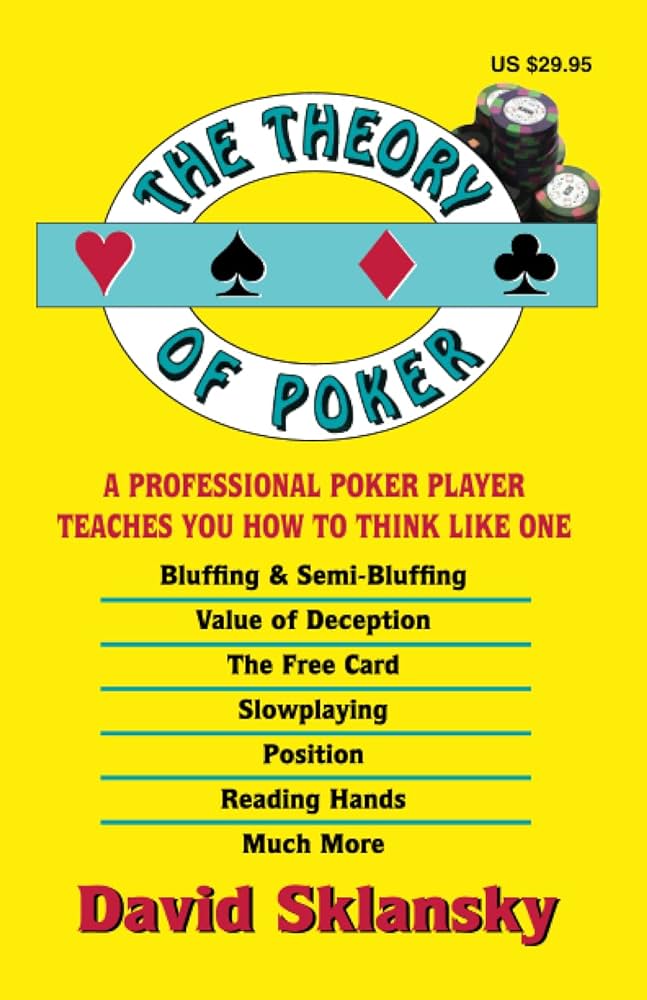
- Book Title:The Theory of Poker
- Author:David Sklansky
- Publication Date:1987
- Publisher:Two Plus Two Publishing
- Language:English
- Number of pages:320
- Dimensions:5.5 x 0.9 x 8.4 inches
- Weight:13.6 ounces
Pokercine rating:
4.7 stars
Diving into “The Theory of Poker” by David Sklansky is akin to being handed a flashlight in the vast, complex labyrinth that is poker strategy. Written with a keen eye for detail yet surprisingly accessible, this book has deservedly become the Holy Grail for poker enthusiasts eager to elevate their game. Through its pages, Sklansky does not just teach poker; he embeds the logic of winning directly into your thought process. Its profound insights are presented in a language that resonates with young players, transforming from mere readers into astute strategists. The brilliance of Sklansky’s work lies not only in the depth of strategy discussed but in its ability to remain relevant in a rapidly evolving game. This is not just a book; it’s a journey into the mind of a poker virtuoso, promising to shape the nebulous world of poker into a grid of logical decisions and profitable plays for the dedicated student.
Summary of the content:
“The Theory of Poker” by David Sklansky is a seminal work that has firmly established itself as a cornerstone of poker literature. Within its pages lies a comprehensive exploration of the intricate world of poker, offering valuable insights into the game’s fundamental strategies and theories. Sklansky introduces a variety of crucial concepts, including the famous “Fundamental Theorem of Poker,” which posits that a player maximizes their gains by playing as if they could see their opponent’s cards.
Through detailed chapters, the book covers a wide array of topics such as the importance of position, the value of deception, the application of pot odds, and the significance of betting patterns. Sklansky delves into the psychology of poker, teaching readers not only how to predict their opponents’ moves but also how to manipulate them to their advantage. He explores different poker variations, including Texas Hold’em, Five-Card Draw, and Seven-Card Stud, illustrating his points with examples that help embed these complex strategies into the reader’s understanding.
Moreover, “The Theory of Poker” discusses the concept of expected value, helping players make the most profitable decisions in the long run. Sklansky also addresses the critical idea of variance, preparing readers for the inevitable ups and downs of the game. This book doesn’t just focus on the mechanics of poker; it also emphasizes the necessity of disciplined bankroll management, mental fortitude, and continuous learning.
In addition to theoretical knowledge, Sklansky provides practical advice on reading opponents, recognizing tells, and the art of bluffing. He encourages readers to adapt their strategies based on game dynamics and to remain flexible in their approach to different playing styles.
“The Theory of Poker” is not merely a collection of strategies; it is a meticulously crafted guide designed to elevate the reader’s understanding from the fundamental to the advanced levels of poker play. It encourages critical thinking and analytical decision-making, aiming to mold readers into versatile, thinking players.
“Every time you play a hand differently from the way you would have played it if you could see all your opponents’ cards, they gain; and every time you play your hand the same way you would have played it if you could see all their cards, you gain.”
David Sklansky
Critical analysis:
“The Theory of Poker” by David Sklansky stands as a monument in poker literature, distinguished by its depth of insight and enduring relevance. One of the book’s paramount strengths is its ability to distill complex theoretical concepts into understandable strategies that players of all levels can apply to their game. Through numerous examples and thorough explanations, Sklansky bridges the gap between theory and practice, providing readers with a toolset that is both comprehensive and adaptable.
However, the book is not without its weaknesses. Some critics argue that certain sections can feel dated, especially with the evolution of online poker and the introduction of game theory optimal (GTO) strategies that are prominent in today’s game. Additionally, beginners may find some of the concepts challenging to grasp without a basic understanding of poker mechanics, suggesting that the book is better suited for those with some experience under their belts.
Despite these minor criticisms, “The Theory of Poker” remains an invaluable resource. Its strengths undoubtedly outweigh its shortcomings, offering a robust framework that helps players think critically about the game. Sklansky’s focus on decision-making processes, rather than mere tactics, equips readers with a versatile strategy applicable across various forms of poker. This approach not only enhances their current game but also lays a foundation for continuous improvement and adaptation.
What you will learn:
From “The Theory of Poker,” readers will embark on a transformative journey, emerging as more thoughtful, analytical, and disciplined players. One of the fundamental lessons is the significance of making decisions based on the available information, probability, and the actions of opponents rather than mere hunches or emotions. Sklansky meticulously explains the concept of expected value and how it should guide every play, underlining the importance of long-term profitability over short-term gains.
Readers will also delve into the psychological aspects of poker, learning to read opponents and employ deception effectively. By understanding the importance of position, betting patterns, and the strategic use of bluffing, readers can manipulate the flow of the game to their advantage. Furthermore, Sklansky’s teachings on bankroll management and the mental resilience required to navigate the volatile nature of poker are invaluable life skills that extend beyond the table.
Perhaps the most crucial takeaway is the adaptability and continuous learning emphasized throughout the book. Sklansky encourages readers to not only apply the concepts learned but to also remain open to evolving their strategies as the game changes. This mindset fosters a perpetual growth that is essential for success in poker.
Why you should read it:
Investing time in “The Theory of Poker” is a strategic move for anyone serious about mastering poker. Sklansky’s comprehensive approach demystifies complex strategies, making them accessible and applicable to real-game scenarios. This book offers more than just tactics; it fosters a deeper understanding of the game and its intricacies. For aspiring poker players, this book is a critical step towards transitioning from a casual player to a formidable strategist. “The Theory of Poker” doesn’t just change how you play the game; it changes how you think about it, offering a competitive edge that is invaluable in the highly strategic environment of poker.
Conclusion:
“The Theory of Poker” by David Sklansky is more than a book; it’s an essential guide for anyone looking to deepen their understanding of poker. Its comprehensive coverage of strategies, real-world applications, and emphasis on critical thinking and continuous improvement make it a timeless resource. While it may present a steep learning curve for beginners, its insights are invaluable to those willing to invest the effort. As the poker landscape evolves, the principles laid out by Sklansky remain relevant, providing a solid foundation upon which players can build and refine their strategies. “The Theory of Poker” is not just recommended reading; it’s a prerequisite for anyone serious about mastering the art and science of poker.
Where to buy:
Interested readers can purchase “The Theory of Poker” by David Sklansky at Amazon.