

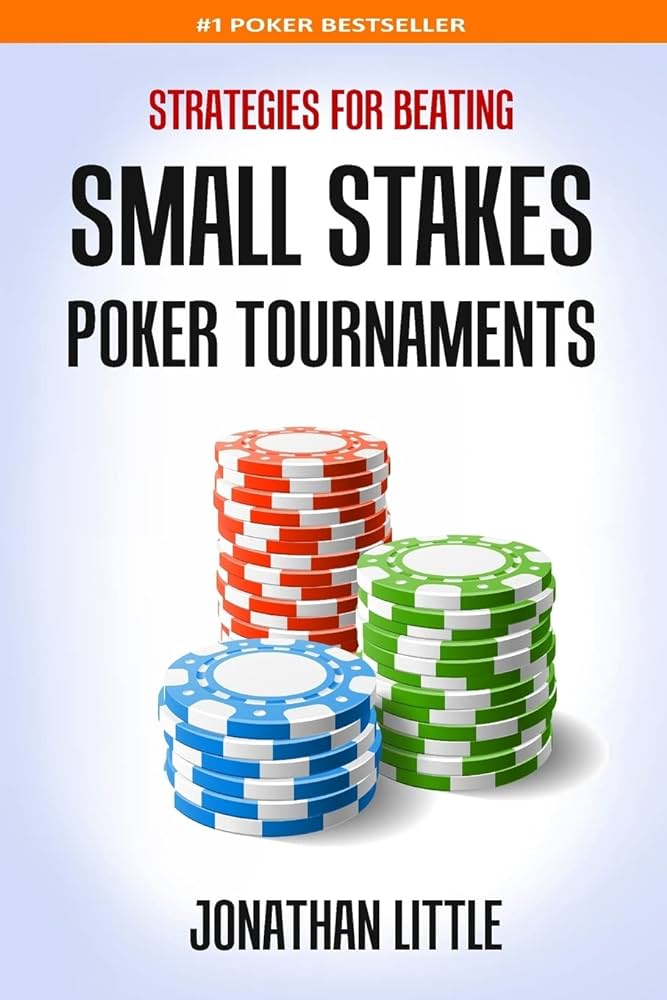
Strategies for Beating Small Stakes Poker Tournaments
- Book Title:Strategies for Beating Small Stakes Poker Tournaments
- Author:Jonathan Little
- Publication Date:2020
- Publisher:D&B Publishing
- Language:English
- Number of pages:256 pages
- Dimensions:6 x 0.6 x 9 inches
- Weight:12 ounces
Pokercine rating:
4.5 starsIn the highly competitive world of small stakes poker tournaments, Jonathan Little’s “Strategies for Beating Small Stakes Poker Tournaments” emerges as a beacon for novices and intermediate players alike. This poker guide embodies a fusion of easy-to-grasp concepts and actionable strategies, tailored specifically for those aiming to dominate the lower rungs of tournament poker. Little’s pragmatic approach to overcoming the prevalent challenges of small stakes tournaments speaks directly to the aspirations of young, ambitious players. His writing style marries the analytical prowess of a seasoned pro with the accessibility needed by the target audience, making advanced poker strategies digestible for readers eager to elevate their game. The book’s insightful analysis, coupled with Little’s personal anecdotes from the felt, provides both a strategic framework and the encouragement essential for climbing the poker ladder.
Summary of the content:
“Strategies for Beating Small Stakes Poker Tournaments” by Jonathan Little offers an exhaustive exploration into the nuanced strategies tailored for excelling in small stakes tournaments. Little embarks on this literary journey by laying the fundamental groundwork, acquainting readers with essential poker terminologies and basic concepts crucial for understanding the game’s mechanics. He then advances into the psychology of poker, dissecting the mindset necessary for success, emphasizing resilience, the art of bluffing, and the significance of table image.
The core of the book delves into specific strategies designed to exploit the common errors made by opponents in small stakes games. Little dissects various stages of a tournament, presenting a tailored approach for each phase. From navigating the early stages with a tight-aggressive play style to adjusting to the dynamic nature of middle stages and mastering the shove-and-fold tactics in the late game, the book covers a wide spectrum of scenarios a player might encounter.
Little goes beyond generic advice, offering detailed hand analyses and decision-making processes that showcase both the mathematical and psychological aspects of the game. He places a strong emphasis on the importance of aggression, positional awareness, and the ability to adapt one’s strategy based on the changing dynamics of the tournament field and individual table compositions. Furthermore, Little dedicates chapters to bankroll management, the nuances of online play, and the transition from online to live poker, providing a well-rounded guide for the aspiring poker professional.
The culmination of the book focuses on self-improvement away from the table, advocating for a holistic approach to becoming a successful poker player. This includes studying the game, mentally preparing for tournaments, and the physical and psychological wellness necessary to perform at one’s best. Through this comprehensive coverage, Little ensures readers are not only equipped with the technical skills required for small stakes dominance but also the mental fortitude and lifestyle habits essential for long-term success in the world of poker.
“Poker is not just a game of cards and odds, but also one deeply rooted in psychological warfare and strategy.”
Jonathan Little
Critical analysis:
Jonathan Little’s “Strategies for Beating Small Stakes Poker Tournaments” is a compact yet rich reservoir of poker wisdom, particularly beneficial for those intent on conquering small stakes tournaments. The book’s major strength lies in Little’s ability to distill complex poker theories into actionable strategies that are comprehensible and executable by novices and intermediate players. His blend of anecdotal evidence and theoretical knowledge makes for an engaging read, bolstering the reader’s learning experience through real-life applications of the discussed concepts.
However, the book is not without its weaknesses. Some readers might find the detailed hand analysis sections to be overly technical, potentially detracting from the narrative flow for those less familiar with advanced poker terminology. Additionally, the heavy focus on tournament play means cash game enthusiasts might not find the book as directly applicable to their preferred format.
Yet, these critiques do not detract from the overall value of the book. “Strategies for Beating Small Stakes Poker Tournaments” is an essential read for its target audience, offering a comprehensive guide that walks the reader through the journey of small stakes tournaments from beginning to end. Little’s commitment to addressing the psychological aspects of poker, alongside the technical strategies, sets this book apart as a holistic tool for aspiring poker players.
What you will learn:
Readers of “Strategies for Beating Small Stakes Poker Tournaments” will be imbued with a wide range of poker skills and insights. Little’s book teaches the importance of developing a solid understanding of poker fundamentals, including the roles of aggression, positional awareness, and patient play. It articulates the significance of adapting one’s strategy to the tournament’s stage and the specific dynamics of the table.
The book also highlights the common pitfalls that ensnare many players in small stakes tournaments, offering strategies to exploit these errors effectively. Readers will learn the nuances of player psychology, how to read opponents, and the importance of maintaining a flexible strategy that can adjust to the unpredictable nature of tournament play. Furthermore, Little’s emphasis on bankroll management and the transition from online to live tournaments equips readers with the knowledge to navigate their poker career with confidence.
Perhaps most importantly, Little instills in his readers the importance of continuous improvement and self-reflection. His book encourages a holistic approach to poker success, grounding the glamorous allure of poker stardom in the reality of hard work, discipline, and a constant pursuit of knowledge. This emphasis on personal development, coupled with technical skill acquisition, ensures readers are not just playing poker but living it, with the mindset and habits of a true professional.
Why you should read it:
For any poker enthusiast looking to dominate the small stakes tournament scene, Jonathan Little’s “Strategies for Beating Small Stakes Poker Tournaments” is an indispensable guide. It offers a comprehensive blueprint for success, combining in-depth strategic considerations with vital psychological insights. Reading this book is not just about learning specific tactics; it’s about embracing a mindset that fosters continuous growth, resilience, and the agile adaptability required to thrive in the fluid world of poker tournaments. Whether you’re aiming to improve your game theoretically, seeking to understand the psychological depth of poker, or simply looking for proven strategies to elevate your play, Little’s book is your roadmap to success.
Conclusion:
“Strategies for Beating Small Stakes Poker Tournaments” stands out as a seminal work in the poker literature, offering tangible strategies enveloped in the wisdom of Jonathan Little’s professional experience. Its detailed analysis, combined with actionable advice, makes it a compelling read for those determined to make their mark in small stakes tournaments. While certain sections may challenge those unfamiliar with poker’s complex domain, the book, as a whole, serves as a comprehensive guide that will undoubtedly elevate the reader’s game. Little’s work is not just a manual on poker; it’s an invitation to embark on a journey of self-discovery and improvement within the microcosm of small stakes tournaments. For anyone seeking to transition from a casual player to a formidable tournament contender, this book is a crucial ally.