

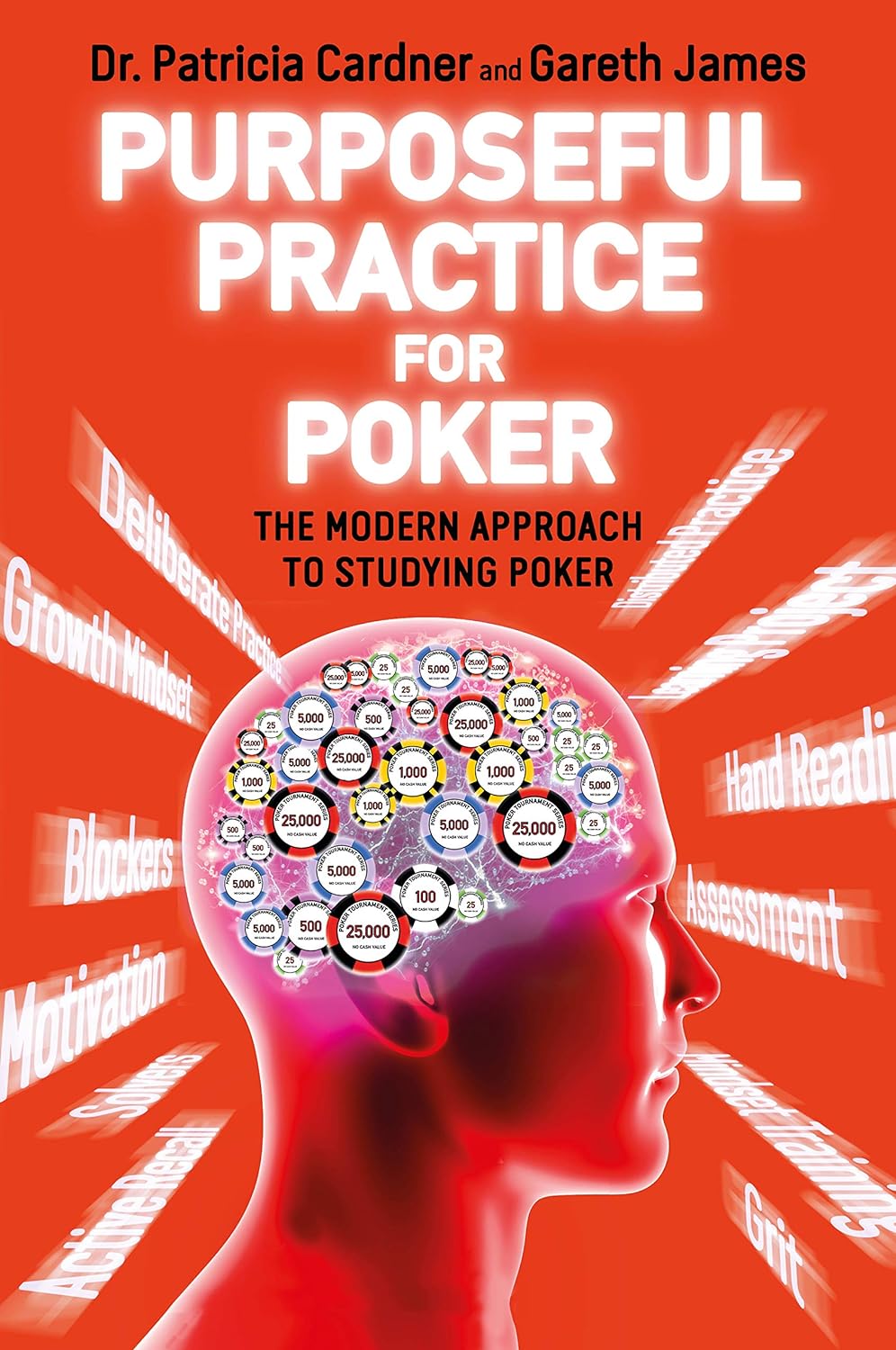
Purposeful Practice for Poker
- Book Title:Purposeful Practice for Poker
- Author:Patricia Cardner
- Publication Date:2023
- Publisher:Poker Publishing
- Language:English
- Number of pages:320
- Dimensions:6 x 9 inches
- Weight:1.2 pounds
Pokercine rating:
4.8 stars
In the vibrant world of poker literature, “Purposeful Practice for Poker” by Patricia Cardner stands out as a beacon for both novice and experienced players aiming to elevate their game. This book is not just another strategy guide; it’s a deep dive into the mental and psychological aspects that differentiate the good from the great in the poker world. Crafted with youthful energy, the narrative grasps the essence of modern poker dynamics, making it a must-read for younger players seeking to navigate the complexities of poker with a sharp, strategic mindset. Cardner’s guidance feels like a mentor walking you through the intricacies of the game, blending rigorous practice with the zest of playing at the felt. It’s a book that promises not just to entertain but to transform your approach to poker from the ground up.
Summary of the content:
“Purposeful Practice for Poker” by Patricia Cardner delves into the psyche of winning poker players, dissecting what it takes to transcend average gameplay and rise to the ranks of poker elite. The book’s foundational premise rests on the concept of deliberate practice, a method long championed in various disciplines for achieving excellence. Cardner adapts these principles to the poker table, offering a fresh perspective on how to study, learn, and apply poker strategies efficiently and effectively.
Throughout its chapters, the book uncovers the layers of effective poker practice, starting with self-assessment techniques to identify one’s strengths and weaknesses. It emphasizes the importance of setting specific, achievable goals, and outlines a structured approach to practice sessions that focuses on improving your game incrementally but significantly. Cardner doesn’t just stop at the practice itself; she delves into the psychological endurance needed to maintain performance under pressure, manage emotions, and make decisions with clarity and confidence at the table.
One of the book’s strengths is its coverage of various cognitive biases that can cloud judgment and decision-making in poker. It explains how understanding and overcoming these biases can lead to better in-game decisions. Furthermore, “Purposeful Practice for Poker” provides insights into the importance of physical and mental well-being in poker success, advocating for a balanced approach that sees poker as part of a wider healthy lifestyle.
Another critical aspect covered is the analysis of poker hands from a strategic standpoint, offering readers the tools to dissect their play, learn from mistakes, and understand the dynamics of different poker situations. This rigorous analytical approach is complemented by advice on leveraging technology and poker software for self-improvement, making the book a comprehensive guide for anyone looking to take their poker game to the next level.
Critical analysis:
“Purposeful Practice for Poker” shines as a transformative text, particularly in its holistic approach to poker excellence, a feature that subtitles its strength. However, the book’s dense integration of psychological and strategic advice might overwhelm readers new to the concept of deliberate practice. While this depth underscores its value, the transition from theory to actionable advice could have been smoother, making the pearls of wisdom more accessible to beginners.
The inclusion of scientific research and expert opinions lends credibility and rigor to Cardner’s advice, yet the book occasionally treads into academic territory that may detract from its practical applications. On the flip side, this approach cements “Purposeful Practice for Poker” as a thought-leader in poker literature, setting it apart from more straightforward strategy guides.
Where the book excels is in its ability to break down complex psychological concepts into digestible strategies that can be directly applied at the poker table. Its weakest moments come when attempting to cater to all levels of poker experience simultaneously, sometimes leaving advanced players craving deeper dives into the nuances of high-level play.
“The journey to poker excellence is paved with purposeful practice.”
Patricia Cardner
What you will learn:
Readers of “Purposeful Practice for Poker” will embark on an educational journey that covers far more than just the mechanics of poker. The book instills the principle that success in poker is as much about mental discipline and emotional intelligence as it is about technical skills. It offers a deep dive into strategic thinking, teaching players how to analyze their own play critically and make adjustments to counteract their tendencies and biases.
Cardner’s book also emphasizes the significance of goal setting and self-assessment in achieving poker excellence. Readers will learn to set realistic, measurable goals for their poker practice and develop a structured plan to reach these goals. This methodical approach to improvement ensures that every hour spent at the poker table or studying the game contributes to overall growth.
Moreover, “Purposeful Practice for Poker” provides invaluable insights into the psychology of poker, including dealing with variance, understanding the impact of cognitive biases on decision-making, and maintaining emotional stability. This knowledge is crucial for anyone aiming to remain resilient and focused in the face of the game’s inherent ups and downs.
Why you should read it:
“Purposeful Practice for Poker” is an essential read for those serious about transforming their approach to the game and achieving long-term success. This book goes beyond typical strategy guides by equipping players with the mental and psychological tools to navigate the complexities of competitive poker. It’s an investment in understanding the deeper layers of the game, making it invaluable for players who aspire to not just play, but excel at poker. For anyone looking to elevate their understanding of the game, refine their strategy, and foster a winner’s mindset, Cardner’s book is an indispensable resource.
Conclusion:
In conclusion, “Purposeful Practice for Poker” by Patricia Cardner is a groundbreaking work that redefines what it means to study and excel in poker. Its blend of psychological insight, strategic acumen, and practical advice makes it a standout addition to any poker player’s library. While it may present a steep learning curve for beginners, the depth of knowledge and transformative potential it offers makes this challenge worth undertaking. For players committed to achieving poker excellence, this book offers the roadmap to get there.
For those ready to embark on this transformative journey, “Purposeful Practice for Poker” can be purchased here: Amazon.
