

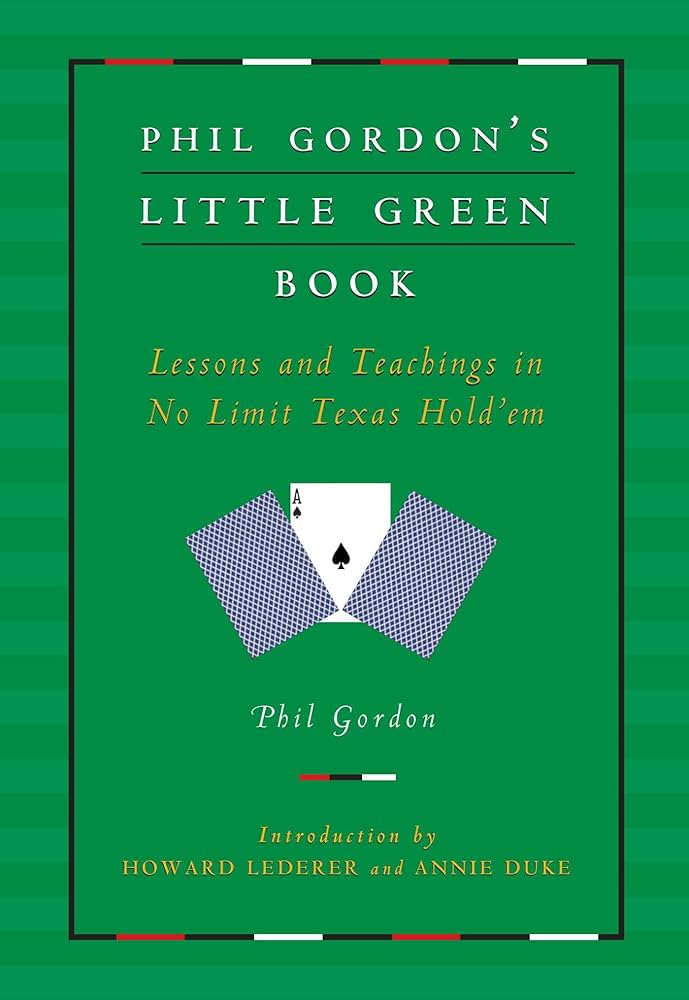
Phil Gordon’s Little Green Book
- Book Title:Phil Gordon’s Little Green Book
- Author:Phil Gordon
- Publication Date:October 1, 2005
- Publisher:Simon Spotlight
- Language:English
- Number of pages:320
- Dimensions:5×1.1×7.25 inches
- Weight:11.3 ounces
Pokercine rating: 4.8 stars
In the evolving landscape of poker literature, “Phil Gordon’s Little Green Book” emerges as a modern classic, meriting a solid 4.8 stars for its intuitive insights and practical advice geared towards the next generation of poker mavens. Gordon’s narrative style blends the analytical with the anecdotal, creating an accessible yet comprehensive guide that speaks directly to players seeking to elevate their game in today’s competitive environment. It’s not just a book; it’s a mentorship in print, offering the kind of wisdom and experience that comes from years of playing at the highest levels. Whether you’re shuffling up at home or eyeing the pot in a high-stakes casino game, Gordon’s strategies and philosophies add a vibrant layer of understanding to the complex tapestry of poker.
Summary of the content:
“Phil Gordon’s Little Green Book” dives deep into the heart of modern poker, covering a terrain rich with strategic nuance and psychological depth. Gordon, with the expertise of a seasoned professional, unpacks the game in a way that’s both profound and accessible, making this book a must-read for players at all levels. The essence of poker, according to Gordon, lies not just in the mechanics of play but in the intricate dance of betting, bluffing, and decision-making that defines the soul of the game.
The book delves into the critical concepts of pot odds, player types, tells, and the importance of position, affirming their roles as fundamental elements of successful play. But Gordon goes further, exploring advanced topics such as the psychology behind bluffing, the significance of table image, and the strategic adjustments required for tournament versus cash games. His discussion on hand analysis and decision-making processes illuminates the complex thought patterns that underpin elite play.
Gordon’s narrative is peppered with anecdotes from his vast experience, which not only entertain but also serve as practical illustrations of broader poker principles. Through these stories, readers gain insight into the mind of a poker professional, understanding not just the “how” but the “why” behind critical in-game decisions. This approach demystifies complex strategies, rendering them accessible to a broader audience and embedding them more deeply in the reader’s understanding of the game.
Furthermore, the book addresses the mental and emotional aspects of poker, stressing the importance of discipline, patience, and psychological resilience. Gordon’s emphasis on self-reflection and continuous improvement resonates throughout the text, advocating for a holistic approach to becoming a successful poker player. He does not shy away from discussing the realities of variance, the challenges of bankroll management, and the psychological rigors of the game, making “Phil Gordon’s Little Green Book” a comprehensive guide not just to the technical, but also to the mental game of poker.
“Poker is not simply a game of odds, moves, and calculations. It’s a game of controlled and exploited emotions.”
Phil Gordon
Critical analysis:
Phil Gordon’s approach to writing “Phil Gordon’s Little Green Book” serves as a beacon for prospective poker players navigating the murky waters of poker strategy. One of its greatest strengths lies in Gordon’s ability to distill complex poker theories into manageable, digestible pieces of wisdom that resonate with both novices and seasoned players alike. His pragmatic approach bridges the gap between theoretical knowledge and practical application, rendering the insights both accessible and actionable.
However, no book is without its weaknesses. Critics might argue that, in an effort to remain accessible, the book sometimes glosses over the complexity of certain concepts, potentially leaving readers who thirst for deeper analytical material wanting more. Additionally, the rapid evolution of poker strategy, driven by online play and data analysis, means that some aspects of the book may feel slightly dated to those at the cutting edge of the game.
Despite these critiques, the book’s enduring relevance is a testament to Gordon’s deep understanding of the timeless aspects of poker psychology and strategy. His emphasis on adaptability, disciplined bankroll management, and the psychological warfare inherent in poker ensures that the book’s core lessons remain pertinent. Gordon’s anecdotal style enriches the text, granting readers a glimpse into the practical application of strategies through his own experiences and mistakes, thus humanizing the journey towards poker mastery.
What you will learn:
Readers of “Phil Gordon’s Little Green Book” will embark on a comprehensive journey through the landscape of poker, beginning with foundational concepts and advancing to the sophisticated strategies used by professionals. Gordon demystifies the game’s complexity, offering clear guidance on calculating pot odds, reading opponents, and the strategic importance of position. Beyond these technical skills, readers will learn to navigate the psychological battlefield of poker, mastering the art of bluffing, recognizing tells, and developing the mental toughness required to endure the game’s inevitable highs and lows.
Equally important, Gordon advocates for a reflective practice, urging players to analyze their plays, learn from their mistakes, and continuously seek improvement. This book teaches the value of adaptability, emphasizing the need to adjust one’s strategies based on the game format, opponent behavior, and the shifting dynamics of play. It’s not just about the cards you’re dealt; it’s about how you play them, how you manage your bankroll, and how you mentally prepare for each game.
The insights gleaned from this book extend beyond specific tactics to embrace a holistic view of poker as a game of informed decision-making, psychological insight, and disciplined risk management. Whether you’re a casual player looking to hold your own in friendly games or an aspiring professional aiming for the high stakes, Gordon’s teachings offer invaluable lessons on improving your game at every level.
Why you should read it:
“Phil Gordon’s Little Green Book” is more than just a poker guide; it’s a gateway to transforming how you think about and play the game. Investing your time in this book is a vote for deepening not only your understanding of poker strategy but also your appreciation for the psychological and emotional disciplines that define the most successful players. Gordon’s wisdom equips readers with the tools needed to navigate the vast, unpredictable seas of poker with confidence and skill. For anyone serious about upgrading their poker game, this book is an indispensable resource.
Conclusion:
In concluding our journey through “Phil Gordon’s Little Green Book,” it’s clear that this text stands as a pillar in the poker community for good reason. With its blend of strategic insight, practical advice, and contemplative wisdom, Gordon provides a roadmap for players of all levels to improve their game. The book’s concise yet comprehensive approach to teaching poker makes it a valuable addition to any player’s library. As we shuffle up and deal in our own games, the lessons from the Little Green Book will undoubtedly echo in our decisions, strategies, and, ultimately, our successes at the table.
