

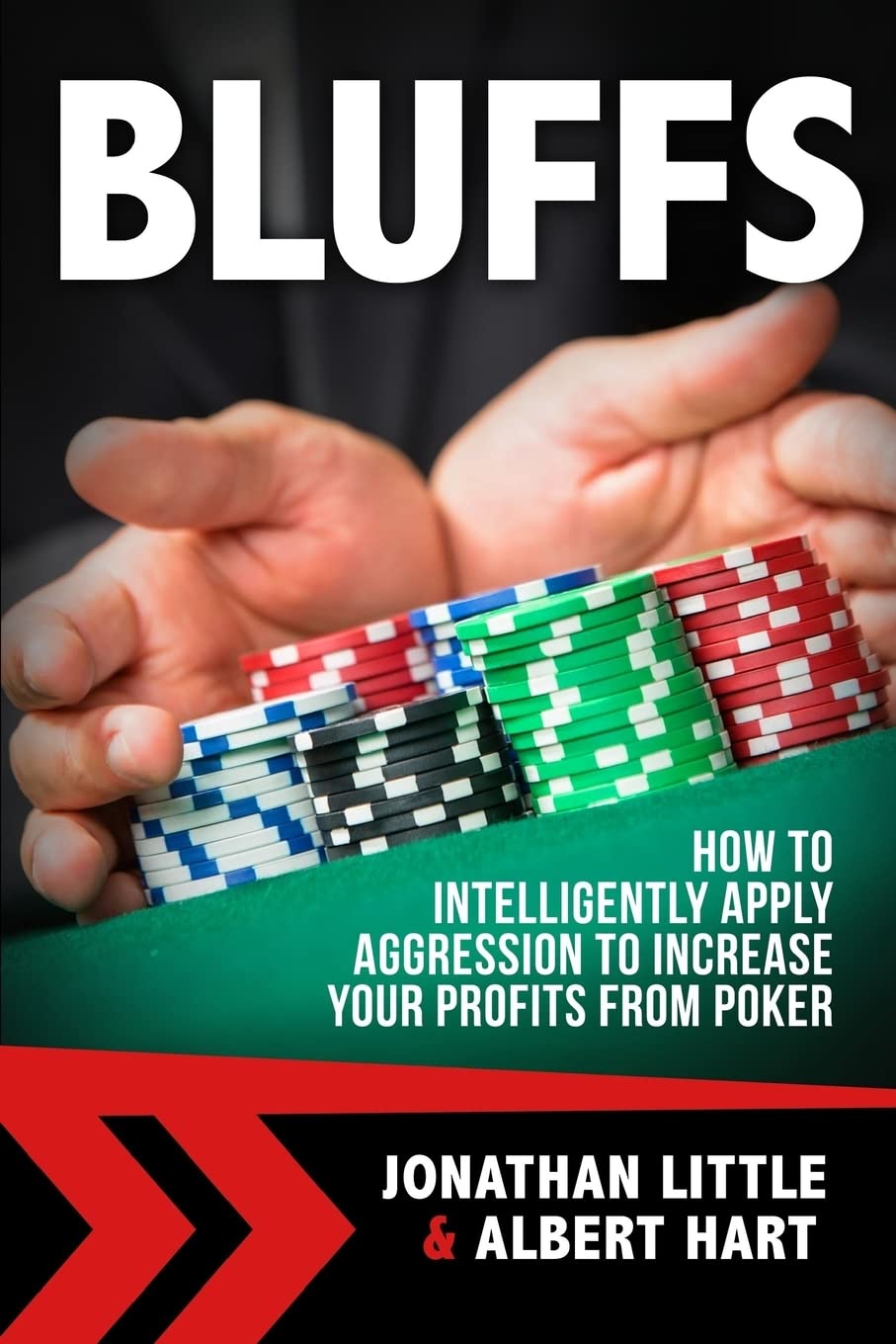
Bluffs
- Book Title:Bluffs
- Author:Jonathan Little and Albert Heart
- Publication Date:August 16, 2016
- Publisher:CreateSpace
- Language:English
- Number of pages:196
- Dimensions:5.98 x 0.42 x 9.02 inches
- Weight:9.4 ounces
Pokercine rating:
4.7 stars
If you’ve ever sat at a poker table, sweating the decision on whether to bluff or fold, “Bluffs: How to Intelligently Apply Aggression to Increase Your Profits from Poker” by Jonathan Little and Albert Hart is a game-changer. Written with an electrifying combination of expertise and accessibility, this book shines a spotlight on one of the most thrilling aspects of poker. Targeting the modern, ambitious player, it peels apart the layers of bluffing with precision and wit. Little and Hart don’t just give you a fish; they teach you to fish, showing how to weave deception into your game. It’s particularly refreshing to see the blend of anecdotal evidence, psychological insights, and strategic depth, making it a rare find that’s as entertaining as it is educational. A masterclass in not just bluffing, but understanding and manipulating the dynamics of poker, this book is a must-read for those looking to elevate their game.
Summary of the content:
At its core, “Bluffs” is much more than your average poker strategy book. Jonathan Little and Albert Hart have created a deep dive into the art and science of bluffing, offering readers a sophisticated yet accessible roadmap to mastering one of the game’s most nuanced skills. The book is meticulously structured to walk players through everything from the fundamentals of bluffing to the most advanced tactics used by professionals.
The content is wide-ranging and thorough, covering topics such as pot odds, playing from different positions, sizing bets wisely, and recognizing good bluffing opportunities. It emphasizes the psychological aspects of poker, teaching readers how to read opponents and exploit their weaknesses effectively. The authors devote significant attention to the importance of table image and how one’s actions can influence an opponent’s perception and subsequent decisions.
Another key aspect of the book delves into the risks associated with bluffing and how to minimize those risks by being selective and strategic. Little and Hart explore the concept of “semi-bluffing,” a technique that combines the elements of bluffing and playing hands with potential to improve. This nuanced approach provides players with a more robust set of tools for navigating the complexities of poker games.
The book is replete with real-life hand examples, showcasing how the concepts presented can be applied in actual play. These examples not only elucidate the strategies discussed but also demonstrate the adaptability of these tactics across different game types, from cash games to tournaments. The narrative is punctuated with exercises designed to help readers internalize the lessons and apply them to their own games.
One of the book’s most compelling features is its focus on self-assessment. Little and Hart challenge their readers to constantly analyze and critique their own play, fostering a mindset of continuous improvement and strategic adaptation. This approach underlines the book’s core message: successful bluffing is as much about self-awareness and psychological acuity as it is about understanding your opponents.
Critical analysis:
“Bluffs” stands out for its comprehensive examination of all aspects of bluffing in poker. Jonathan Little and Albert Hart have succeeded in creating a guide that balances technical advice, psychological insight, and practical application. The strengths of the book undoubtedly lie in its thorough dissection of the bluffing process, coupled with actionable strategies that players can implement immediately.
However, the book is not without its weaknesses. Novices may find some of the concepts daunting at first, as “Bluffs” does lean towards a more advanced audience. The depth of analysis, while a strength, could potentially overwhelm those new to the game or those looking for a lighter read. Additionally, while the real-life hand examples are incredibly useful for understanding the application of strategies, the sheer volume and complexity of some examples might require readers to have a foundational knowledge of poker to fully appreciate them.
Despite these minor drawbacks, “Bluffs” is an invaluable resource. The book pushes the boundaries of what players might typically expect from a poker guide, encouraging not just passive consumption of information but active engagement and self-analysis. It’s this aspect that elevates “Bluffs” from merely instructional to genuinely transformative.
“To master poker, one must not only focus on the cards but also on the psychology of the opponent.”
Jonathan Little
What you will learn:
“Bluffs” covers a spectrum of lessons crucial for any poker player seeking to improve their game. The book begins by establishing a solid understanding of what bluffing is and why it is a critical component of poker strategy. Readers will learn the mathematics of bluffing, including how to calculate pot odds and expected values, enabling them to make more informed decisions at the table.
One of the key takeaways from the book is the importance of psychological acumen in poker. Little and Hart delve into how to read opponents and understand the psychological pressures at play, which is essential for successful bluffing. This foundation leads to practical advice on how to execute bluffs successfully, including when to bluff, how much to bet, and how to choose the right targets.
The concept of semi-bluffing is another significant theme. This strategy, which involves bluffing with hands that have the potential to improve, is dissected to show its effectiveness and how it can be integrated into a player’s repertoire. The authors also emphasize the importance of adaptability, teaching readers how to adjust their strategies based on game dynamics and opponent behaviors.
Moreover, “Bluffs” doesn’t just teach about offensive play; it also advises on how to defend against bluffs, equipping readers with the skills to discern when opponents are likely bluffing and how to respond effectively. This comprehensive approach ensures that readers come away with a well-rounded understanding of bluffing, prepared for both applying it in their own game and countering it in others’.
Why you should read it:
Investing your time in “Bluffs” is not just about learning to bluff; it’s about refining your overall poker strategy and elevating your game to a new level. Poker is not merely a game of luck—it’s a game of skill, psychological warfare, and strategic maneuvering. This book teaches you how to blend these elements seamlessly into your game, employing bluffing not as a random tactic but as a precise, calculated move. Whether you’re playing in home games, online, or in high-stakes tournaments, the insights from “Bluffs” will give you the edge over your opponents. It’s a must-read for anyone serious about not just playing poker, but excelling at it.
Conclusion:
In conclusion, “Bluffs” by Jonathan Little and Albert Hart is a remarkable resource for anyone looking to deepen their understanding of one of poker’s most intricate and misunderstood aspects. Through its combination of theoretical knowledge, psychological insight, and practical advice, the book equips readers with the skills to use bluffing effectively and judiciously. While it may be more suited to those with some experience in poker, its lessons are universally valuable. “Bluffs” is not just a book about bluffing; it’s a comprehensive guide to becoming a smarter, more formidable poker player. Highly recommended for those committed to improving their game.
Where to buy:
Find your copy of “Bluffs: How to Intelligently Apply Aggression to Increase Your Profits from Poker” by Jonathan Little and Albert Hart at Amazon.