

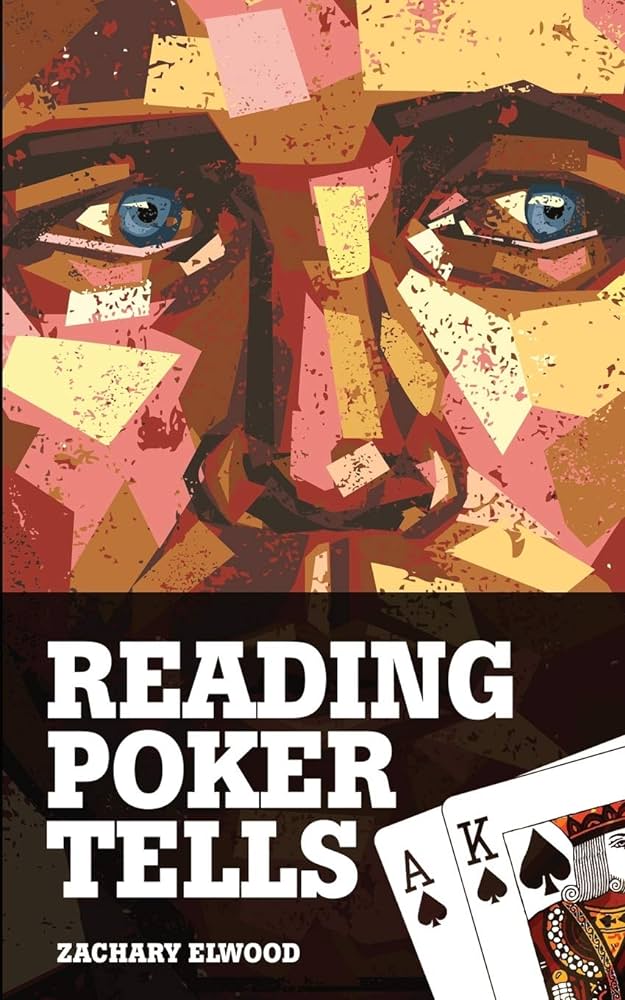
Reading Poker Tells
- Book Title:Reading Poker Tells
- Author:Zachary Elwood
- Publication Date:2021
- Publisher:Independently published
- Language:English
- Number of pages:274
- Dimensions:5.5 x 0.63 x 8.5 inches
- Weight:12 ounces
Pokercine rating:
4.5 stars
Diving into “Reading Poker Tells” by Zachary Elwood is like finding a secret map to the treasure of non-verbal poker wisdom. This isn’t just another poker strategy book; it’s a nuanced exploration into the subtle art of deciphering opponents’ unintentional cues at the table. Written in an accessible, engaging style, it appeals especially to the younger crowd eager to sharpen their live game. Elwood’s observations are not merely theoretical ramblings but practical insights, peppered with humor and relatability, making the science of tells accessible to all. Whether you’re a casual player looking to hold your own in home games or aspiring to crush at casinos, Elwood offers gems of wisdom that can significantly level up your live play. In short, “Reading Poker Tells” is the cool, wise mentor you didn’t know you needed in the poker world.
Summary of the content:
Zachary Elwood’s “Reading Poker Tells” serves as a comprehensive guide, meticulously unraveling the psychological tapestry of the poker world. This book breaks down an array of non-verbal cues or ‘tells’ that players often unwittingly display, providing the reader with an arsenal of insight to interpret opponents’ hidden intentions. Elwood systematically categorizes tells into sections based on their occurrence during the various stages of a hand – from pre-flop betting patterns to the momentous showdown.
Elwood lays the groundwork by addressing common misconceptions about poker tells, emphasizing the importance of context and player tendencies. He then delves into the nitty-gritty, discussing various physical movements, betting habits, and verbal cues, and what they potentially signify. The book provides real-world examples from Elwood’s extensive poker experience, supported by case studies that demonstrate how these tells can be observed and exploited in live play.
A significant portion of the book is dedicated to understanding timing tells – the insights that can be gleaned from how quickly or slowly a player makes a decision. Equally, attention is given to the type of hands players reveal at showdown and how this information can be used to profile them in future hands. Elwood does not shy away from the complexity of interpreting tells accurately, acknowledging that a tell from one player could mean something entirely different when exhibited by another.
“Reading Poker Tells” goes beyond mere observation, offering strategies on how to manage one’s own tells, thereby turning the tables on opponents. The book also touches upon the psychological aspects of poker, such as handling tilt and using deception to one’s advantage. Elwood’s work is thorough, covering virtually every aspect of non-verbal communication in poker, from physical gestures to the nuances of speech patterns.
“The most reliable tells are those exhibited during a player’s waiting-for-action period.”
Zachary Elwood
Critical analysis:
Zachary Elwood’s “Reading Poker Tells” is an invaluable resource for anyone serious about improving their live poker game, but it’s not without its critiques. Elwood presents a goldmine of information, meticulously detailed and categorized, making it one of the most comprehensive guides on poker tells. His use of real-life examples adds a practical dimension to the book, allowing readers to visualize concepts and apply them in their gameplay.
However, one might argue that the book’s extensive detail can be its Achilles’ heel. Beginners may find themselves overwhelmed by the sheer volume of tells discussed. Moreover, while Elwood’s emphasis on the variability of tells across different players is crucial, it may lead some readers to second-guess their judgments, potentially causing hesitation in high-stakes moments.
Nonetheless, the strengths of “Reading Poker Tells” far outweigh its weaknesses. Elwood’s practical advice on managing one’s own tells and the psychological insights provided are particularly valuable. The book encourages readers not just to observe but to think deeply about the context, enhancing their strategic thinking in live poker scenarios.
What you will learn:
“Reading Poker Tells” is a treasure trove of insights for poker enthusiasts. Readers will learn to observe opponents’ behaviors and interpret them within the game’s context, enhancing their ability to make informed decisions. Elwood educates on the various types of tells, including physical gestures, verbal cues, and betting patterns, emphasizing their interpretation’s complexity. This book will teach you to recognize when an opponent is likely bluffing or holding a strong hand based on their actions or inactions at the table.
Moreover, readers will grasp the importance of timing in poker. Understanding how the speed of a player’s decision-making can reveal their confidence level or uncertainty about a hand is a game-changer. Elwood also sheds light on psychological strategies for managing personal tells and using deception effectively, offering readers a more profound understanding of the mental game of poker.
Essentially, “Reading Poker Tells” equips players with the skills to become more observant and analytical, transforming them from mere participants to strategic contenders. It’s a deep dive into the human side of poker, where psychology and strategy intersect, providing readers with the tools to not only read their opponents but also to introspectively manage their own gameplay.
Why you should read it:
Investing time in “Reading Poker Tells” is akin to investing in your poker education, especially if live games are your arena. In a game where the margins between victory and defeat can be razor-thin, understanding the nuanced communication of poker tells offers a substantial edge. This knowledge isn’t just theoretical; it’s practical, applicable in every hand you play. By becoming proficient in reading tells, you transform your poker game from playing the cards to playing the opponent. For anyone looking to elevate their live game beyond the basics, mastering the art of reading tells is not just recommended; it’s essential.
Conclusion:
“Reading Poker Tells” by Zachary Elwood crystallizes the essence of live poker into a digestible, enlightening read. It stands as a quintessential guide for players eager to delve into the psychological intricacies of poker, offering a wealth of wisdom on understanding and leveraging non-verbal cues. While the book’s detailed approach may appear daunting to novices, its comprehensive insights into poker tells are invaluable for those committed to elevating their game. Elwood not only teaches readers to decode their opponents but also to reflect on their gameplay, making this book a pivotal read for anyone serious about live poker. “Reading Poker Tells” is, without doubt, an instrumental piece in the poker literature, recommended for its practical wisdom and transformative insights.